Tooth shade guides are essential tools for dentists, facilitating accurate color communication and ensuring aesthetic restorative outcomes.
Variations in shade selection can occur due to operator experience and lighting conditions, highlighting the need for standardized systems.
What is a Tooth Shade Guide?
A tooth shade guide is a standardized system comprised of artificial teeth, meticulously crafted to represent a range of human tooth colors. These guides, like the VITA Classical or Portrait IPN, serve as visual references for dentists and dental technicians. They aid in selecting the most appropriate shade for dental restorations – crowns, veneers, or fillings – to achieve a natural and aesthetically pleasing result.
Essentially, a shade guide provides a common language for color communication within the dental team, minimizing subjective interpretations and ensuring consistency in restorative dentistry. Accurate shade selection relies on careful observation and comparison under controlled lighting.
Importance of Accurate Shade Selection
Accurate shade selection is paramount in restorative dentistry, directly impacting patient satisfaction and the overall aesthetic success of treatment. A mismatch can lead to restorations appearing artificial or causing psychological distress for the patient. Factors like lighting and operator experience influence perception, emphasizing the need for standardized guides.
Furthermore, precise shade matching ensures harmonious integration of the restoration with the surrounding natural teeth, contributing to a lifelike and natural smile. Utilizing tools like spectrophotometers alongside visual guides enhances accuracy and minimizes discrepancies.
Historical Development of Shade Guides
Early attempts at tooth shade standardization were subjective, relying on visual comparisons and limited color palettes. The development of the VITA Classical Shade Guide in the 1930s marked a significant advancement, providing a systematic approach to shade selection based on hue, chroma, and value.
Later, the Vita 3D Master system expanded upon this, incorporating a wider range of shades to address individual variations. Continuous refinement aims to improve accuracy and address challenges like metamerism, ensuring more predictable aesthetic outcomes.
Types of Tooth Shade Guides
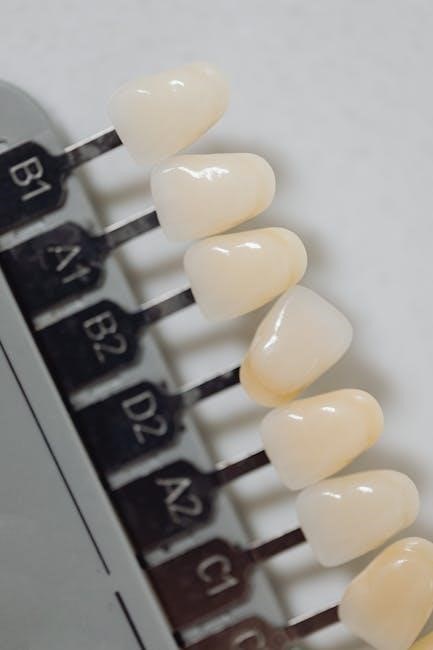
Various shade guides exist, including VITA Classical, Vita 3D Master, and Chromascop, each offering unique characteristics for matching natural teeth and restorations effectively.
VITA Classical Shade Guide
The VITA Classical Shade Guide, a longstanding standard, comprises fourteen shades categorized into four main groups: A, B, C, and D, representing different hue variations. Each group progresses in value from 1 (lightest) to 4 (darkest).
This guide is frequently used as a reference point, even when employing other systems, and its tabs mimic natural tooth structure. Dentists often include a photographic image of a VITA Classical tab alongside master tabs for comparison. However, it’s limited in capturing subtle chroma variations, prompting the development of more advanced guides.
Vita 3D Master Shade Guide
The Vita 3D Master Shade Guide expands upon the Classical system, offering a more comprehensive approach to shade selection. It incorporates three coordinates: hue, value, and chroma, resulting in 29 distinct shades.
This system allows for a more precise match, acknowledging that natural teeth rarely fit neatly into basic A-D categories. It’s particularly useful for complex cases requiring nuanced color reproduction. Accurate shade matching with this guide necessitates color-corrected fluorescent lighting with a Color Rendering Index above 90.
Chromascop Shade Guide
The Chromascop Shade Guide presents a unique approach, utilizing a continuous color spectrum rather than discrete tabs. This system aims to mimic the natural, gradual transitions of color found in teeth, offering a more refined shade selection process.
It focuses on identifying the dominant hue and then adjusting for chroma and value. While offering potential for precision, mastering the Chromascop requires dedicated training and a strong understanding of color theory. Consistent lighting conditions are crucial for reliable results.
Bleached Shade Guide (for Whitened Teeth)
Bleached Shade Guides are specifically designed for selecting shades after teeth whitening procedures. Traditional guides often fall short as they don’t encompass the lighter, more nuanced tones achieved through bleaching. These guides typically feature a range of lighter shades, often extending beyond the conventional Vita or Chromascop systems.
Accurate shade selection post-bleaching is vital for natural-looking restorations. It’s important to consider that bleached teeth can exhibit increased translucency, influencing perceived color.
Understanding Color Theory in Shade Matching
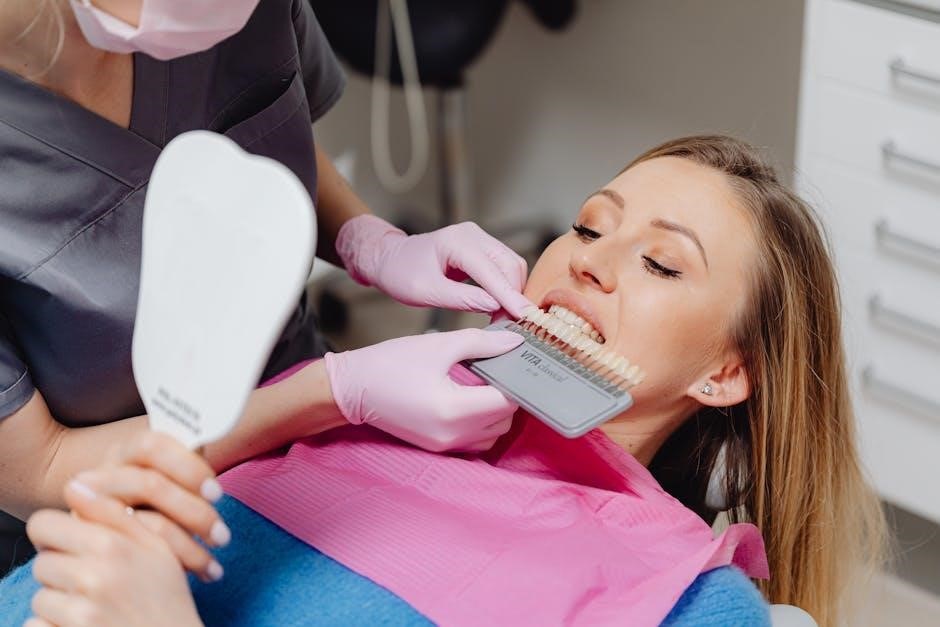
Color theory—hue, chroma, and value—is fundamental to precise shade matching. Dentists must assess these elements systematically to replicate natural tooth aesthetics effectively.
Hue: The Basic Color
Hue defines the basic color family, like reddish-brown or reddish-grey, and is the first parameter considered during shade selection. Research indicates that restorations in tertiary hospital settings in Nigeria frequently utilize mid-range reddish-brown hues, while reddish-grey shades are less common.
Accurate hue determination is crucial, as it significantly impacts the overall aesthetic result. Operators should begin shade matching by identifying the correct hue before proceeding to assess chroma and value. Consistent hue selection contributes to natural-looking restorations.
Chroma: The Intensity of Color
Chroma represents the color’s saturation or intensity, ranging from pale to vivid. After establishing the hue, assessing chroma is the next critical step in shade matching. Variations in chroma influence the perceived naturalness of a restoration.
Careful evaluation of chroma ensures the restoration blends seamlessly with adjacent teeth. It’s important to note that individual operator ability significantly impacts accurate shade selection, including discerning subtle differences in chroma levels.
Value: The Lightness or Darkness of Color
Value defines a tooth’s lightness or darkness, ranging from light to dark, and is arguably the most important determinant in shade matching. Establishing the correct value is crucial as it significantly impacts the overall aesthetic outcome of a restoration.
Even slight discrepancies in value can make a restoration appear unnatural. Accurate assessment requires consistent lighting – ideally, color-corrected fluorescent light with a CRI above 90 – to avoid perceptual errors.
Factors Influencing Shade Perception
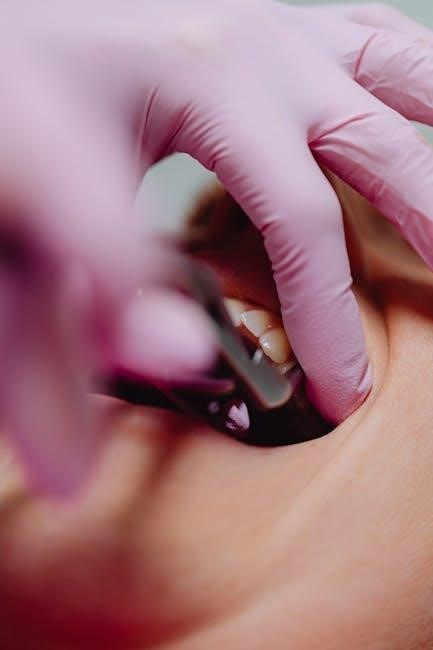
Shade perception is subjective, impacted by lighting, operator experience, patient’s existing shade, and metamerism—where colors appear to match under some lights but differ under others.
Lighting Conditions (Color Rendering Index ⎼ CRI)
Optimal lighting is paramount for accurate shade matching. The Color Rendering Index (CRI) measures a light source’s ability to accurately display colors. A CRI above 90 is recommended, mimicking natural daylight and minimizing metamerism.
Fluorescent lights with a high CRI, or natural daylight, are preferred over standard operatory lights. Inconsistent or inadequate lighting significantly compromises shade selection, leading to mismatches and potentially unsatisfactory restorative results. Shade matching is best done with color-corrected fluorescent light.
Operator Experience and Training
Consistent shade selection relies heavily on the dentist’s experience and training. Research indicates a statistically significant difference in shade matching ability between individuals. Comprehensive training on color theory, shade guide utilization, and the influence of lighting is crucial.
Experienced operators demonstrate greater consistency, while novices may struggle with subtle color nuances. Continuing education and practice refine skills, minimizing subjective errors and improving aesthetic outcomes. Blending multiple shades may be necessary in certain situations.
Patient’s Existing Tooth Shade
The patient’s natural tooth shade serves as a primary reference point for restorative work. Matching adjacent teeth ensures a harmonious and natural-looking result. However, existing shades may be compromised by staining, discoloration, or previous restorations.
Dentists must assess the overall oral environment and consider the patient’s preferences. Accurate assessment requires proper lighting and a systematic approach, acknowledging that restorations may differ slightly from existing dentition.
Metamerism and its Impact
Metamerism is a phenomenon where two colors appear to match under one lighting condition but differ under another. This poses a significant challenge in shade matching, as operatory and daylight illumination vary. Restorative materials can exhibit metamerism, appearing correct in the dental office but mismatched outdoors.
Dentists must be aware of this effect and utilize color-corrected lighting (CRI >to minimize discrepancies, ensuring long-term aesthetic success.
Shade Selection Techniques
Shade selection employs visual matching, spectrophotometric analysis, and digital systems for precise color determination. Combining guides, like Vita Classical with Portrait IPN, improves accuracy.
Visual Shade Matching
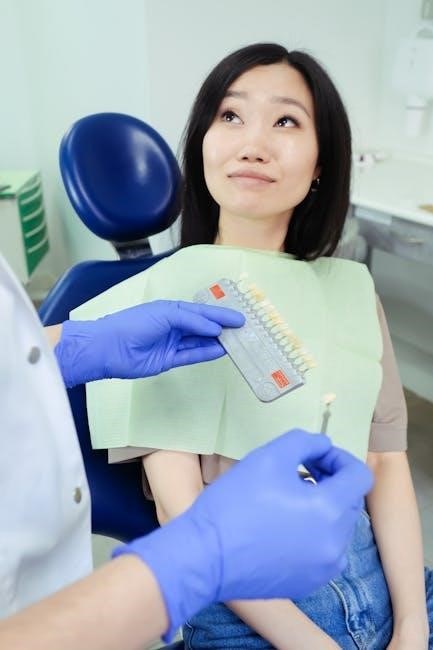
Visual shade matching remains a cornerstone technique, relying on the clinician’s perception under standardized lighting. It involves comparing the prepared tooth to shade tabs, sequentially assessing hue, chroma, and value.
Effective visual matching necessitates a color-corrected fluorescent light with a Color Rendering Index (CRI) exceeding 90, or utilizing natural daylight to minimize metamerism.
Begin with hue identification, followed by chroma and value adjustments, often incorporating photographic references of shade tabs for consistent results. Blending multiple shades may be necessary for optimal aesthetics.
Spectrophotometric Shade Analysis
Spectrophotometric shade analysis offers a more objective approach, quantifying tooth color using spectral reflectance data. These devices measure the precise wavelengths of light reflected by the tooth, providing L*a*b* values representing lightness, red-green, and yellow-blue coordinates.
This minimizes subjective errors inherent in visual matching, offering greater consistency.
Data can be stored and digitally communicated to the dental laboratory, ensuring accurate shade reproduction in restorations. However, understanding the limitations of the device and proper calibration are crucial.
Digital Shade Matching Systems
Digital shade matching systems integrate spectrophotometry with advanced software, streamlining the shade selection process. These systems often involve intraoral scanners or digital cameras capturing tooth color data, which is then analyzed and displayed on a computer screen.
They facilitate precise shade communication with laboratories and offer features like shade maps and virtual try-ins.
Accuracy relies on proper calibration, consistent scanning techniques, and appropriate lighting conditions, ensuring reliable and reproducible results for aesthetic restorations.
Specific Shade Guide Systems in Detail
Various shade guide systems, like Dentsply Sirona IPN and Vita Classical, offer unique approaches to shade representation, influencing restorative dentistry’s aesthetic precision.
Dentsply Sirona IPN Shade Guide
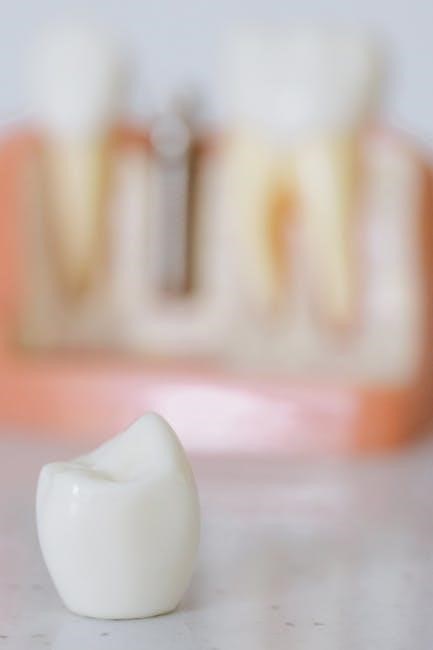
The Dentsply Sirona IPN shade guide represents a significant advancement in shade matching, closely mirroring natural tooth aesthetics. Each tooth within the guide features a blend of three distinct colors – a contrasting neck shade, a mid-body tone, and a translucent incisal edge.
This innovative design replicates the five aesthetic zones found in natural teeth, enhancing the accuracy of shade selection. Successful shade matching with the IPN guide necessitates utilizing color-corrected fluorescent lighting with a Color Rendering Index (CRI) exceeding 90, or ideally, natural daylight.
Portrait IPN Shade Guide & Vita Classical Comparison
The Portrait IPN shade guide is designed to closely align with the widely recognized VITA Classical shade guide, offering a familiar framework for many dental professionals. However, Portrait IPN goes further by incorporating a multi-layered approach, mimicking the natural tooth’s complex color variations.
When utilizing both systems, incorporating a photographic reference of a VITA Classical tab alongside the master tab is recommended. This ensures a consistent baseline and aids in accurate shade communication, particularly when transitioning between guides.
Shade Conversion Charts (IPN to Vita)
Shade conversion charts are invaluable tools when transitioning between different shade guide systems, such as Dentsply Sirona IPN and VITA Classical. These charts provide a cross-reference, allowing clinicians to approximate equivalent shades across systems, though direct one-to-one matches aren’t always achievable.
It’s crucial to remember that these charts serve as a starting point; individual tooth characteristics and lighting conditions necessitate careful visual assessment. Relying solely on conversion charts without clinical judgment can compromise aesthetic results.

Commonly Selected Shades & Regional Variations
Shade preferences vary geographically; studies in Nigeria reveal mid-range reddish-brown hues are frequently chosen for advanced restorations, differing between clinics and operators.
Most Frequent Shades in Tertiary Hospital Settings (Nigeria Example)
Research conducted within a tertiary hospital facility in Southwestern Nigeria indicates a preference for shades falling within the mid-range of the reddish-brown hue spectrum for advanced restorative procedures. Conversely, shades exhibiting a reddish-grey hue were notably less frequently selected by dental professionals. This distribution is influenced by factors such as the specific shade guide utilized, the operator’s experience level, the chosen restorative technique, and the lighting conditions present within the operatory environment. Furthermore, studies demonstrate significant individual differences in tooth shade selection abilities, suggesting a potential need for blending multiple shades to achieve optimal aesthetic results.
Variations Based on Geographic Location
Tooth shade preferences demonstrate notable geographic variations, influenced by ethnic backgrounds and regional populations’ natural tooth color distributions. While specific data remains limited, anecdotal evidence suggests differing shade selections across continents. Cultural perceptions of “whiteness” also play a role, impacting desired aesthetic outcomes. Standardization efforts face challenges due to these regional nuances. Further research is crucial to map global shade preferences accurately, enabling dentists to cater to diverse patient expectations and achieve harmonious restorative results tailored to specific geographic locations.
Influence of Restoration Type on Shade Choice
Restoration material significantly impacts shade selection strategies. Porcelain restorations demand precise matching, often utilizing multi-layered techniques to mimic natural tooth translucency. Composite resins offer greater shade flexibility, allowing for blending and customization. The aesthetic zone dictates the level of detail required; anterior teeth necessitate meticulous shade matching compared to posterior restorations. Furthermore, the chosen cement’s shade influences the final outcome, requiring careful consideration during the selection process to achieve optimal aesthetic integration.
Advanced Considerations in Shade Matching
Advanced techniques involve blending multiple shades, recognizing aesthetic zones within teeth, and understanding translucency’s role in achieving lifelike restorative results for optimal aesthetics.
Multi-Layered Restorations & Shade Blending
Multi-layered restorations often necessitate blending multiple shades to mimic natural tooth structure accurately. This approach acknowledges that teeth aren’t monolithic in color; instead, they exhibit variations from the cervical to the incisal edge.
Employing a combination of shades—contrasting neck colors with translucent enamel—creates depth and realism.
The Portrait IPN shade guide exemplifies this, featuring blends of three colors per tooth, representing five distinct aesthetic zones.
Careful shade blending enhances the restoration’s aesthetic integration, resulting in a more natural appearance and improved patient satisfaction.
Aesthetic Zones of a Tooth
Aesthetic zones represent distinct areas of a tooth requiring individualized shade consideration. Typically, teeth are divided into five zones: the cervical, incisal edge, and transitional areas. Each zone exhibits unique characteristics in terms of hue, chroma, and value.
The Portrait IPN shade guide recognizes this, incorporating blends of colors to replicate these variations.
Accurate shade matching within each zone is crucial for achieving lifelike restorations. Ignoring these subtle differences can result in a restoration appearing artificial or lacking depth.
The Role of Translucency in Shade Selection
Translucency significantly impacts the perceived shade of a tooth, especially in the incisal region. It refers to the passage of light through the tooth structure, creating depth and vitality. Shade guides, like the Portrait IPN, acknowledge this by incorporating translucent enamel shades.
Ignoring translucency can lead to restorations appearing opaque and unnatural.
Proper shade selection must consider how light interacts with the tooth, mimicking the natural optical properties for a harmonious aesthetic result.
Troubleshooting Shade Matching Issues
Addressing metamerism and difficult cases requires re-evaluation under different lighting. Post-cementation shade discrepancies may necessitate adjustments for optimal aesthetic outcomes.
Dealing with Difficult Cases
Complex shade matching often arises with multi-layered restorations or when patients present with non-uniform existing dentition. In these scenarios, relying solely on a single shade tab is insufficient; blending multiple shades becomes crucial.
Consider the aesthetic zones of the tooth, utilizing a polychromatic approach to mimic natural variations.
Photographic documentation, alongside a VITA Classical reference, aids in consistent communication.
Furthermore, acknowledging potential metameric effects and evaluating under diverse lighting conditions are vital steps for achieving predictable, aesthetically pleasing results.
Addressing Metameric Effects
Metamerism, where two colors appear to match under one light source but differ under another, poses a significant challenge in shade matching. To mitigate this, utilize color-corrected fluorescent lighting with a Color Rendering Index (CRI) above 90, or ideally, natural daylight.
Employ spectrophotometric analysis for objective shade data.
Document the chosen shade under multiple illuminants and inform the patient about potential shifts. Careful shade selection and communication minimize discrepancies, ensuring long-term aesthetic success.
Re-evaluating Shade After Cementation
Post-cementation shade evaluation is crucial, as the restoration’s appearance can change once bonded. Hydration of the cement and altered light interaction can influence perceived color. Re-assess the shade under consistent lighting conditions, comparing it to adjacent teeth.
If discrepancies exist, consider polishing to adjust translucency or, in severe cases, re-cementation with a different shade. Thorough documentation of the initial and final shades is essential for optimal aesthetic outcomes.
The Future of Tooth Shade Guides
AI and digital workflows are poised to revolutionize shade matching, offering personalized guides and improved communication. These advancements promise greater accuracy and efficiency in restorative dentistry.
Artificial Intelligence (AI) in Shade Matching
AI-powered systems are emerging as a transformative force in tooth shade selection, promising to overcome the inherent subjectivity of visual methods. These technologies utilize advanced algorithms and machine learning to analyze tooth color with remarkable precision.
AI can process complex spectral data, accounting for factors like translucency and surface texture, to deliver more objective and consistent results.
Furthermore, AI can assist in predicting shade changes over time, aiding in the creation of long-lasting, aesthetically pleasing restorations. The integration of AI into digital workflows streamlines the shade communication process between dentists and dental technicians, minimizing errors and enhancing patient satisfaction.
Digital Workflows and Shade Communication
Digital dentistry revolutionizes shade matching through streamlined workflows and enhanced communication. Intraoral scanners capture precise tooth color data, eliminating inconsistencies associated with manual shade selection. Digital images, incorporating standardized color calibration, facilitate accurate shade transmission to dental laboratories.
Software platforms enable virtual shade try-ins, allowing clinicians and technicians to collaborate effectively. This digital approach minimizes misunderstandings and ensures consistent shade reproduction in restorations. Furthermore, digital records provide a valuable reference for future treatments and shade adjustments, improving long-term aesthetic outcomes.
Personalized Shade Guides
The future of shade matching may involve personalized shade guides tailored to individual patient needs and regional variations. Recognizing that universal shade systems don’t always capture the nuances of natural dentition, customized guides could improve aesthetic outcomes.
AI-driven analysis of patient photographs and spectral data could generate unique shade tabs. This approach addresses metamerism and ensures restorations harmonize seamlessly with existing teeth. Such innovation promises more predictable and satisfying results, moving beyond standardized systems towards truly individualized dental aesthetics.
Maintaining Shade Accuracy
Consistent shade matching requires proper storage of guides, regular calibration of digital systems, and acknowledging that age impacts guide reliability.
Proper Storage of Shade Guides
Maintaining the integrity of tooth shade guides is paramount for consistent and reliable shade selection. Guides should be stored in a clean, dry environment, protected from direct sunlight and strong artificial light sources, as prolonged exposure can cause color fading or alteration.
Ideally, guides should be kept in their original cases or a dedicated storage container to prevent physical damage, such as chipping or scratching, which can affect their visual appearance. Regular inspection for any signs of damage or discoloration is also crucial.
Furthermore, avoid contact with abrasive materials or cleaning agents that could compromise the shade accuracy of the guide tabs. Proper storage ensures the longevity and dependability of these essential tools.
Regular Calibration of Digital Systems
Digital shade matching systems, while offering precision, require routine calibration to maintain accuracy. Calibration ensures the device consistently measures color within acceptable tolerances, preventing discrepancies between the displayed shade and the actual tooth color.
Manufacturers typically recommend calibration intervals – often every six to twelve months – using standardized calibration tools.
Factors like ambient light and monitor aging can influence readings, necessitating periodic adjustments. Consistent calibration, alongside proper technique, is vital for reliable digital shade selection and predictable restorative outcomes, minimizing metamerism and ensuring patient satisfaction.
Impact of Age on Shade Guides
Tooth shade guides, particularly physical ones, experience color changes over time due to prolonged exposure to light, temperature fluctuations, and handling. This degradation can lead to inaccurate shade selection, impacting restorative dentistry’s aesthetic success.
Plastic materials fade or yellow, altering the original hues. Regular comparison with newer guides, or replacement after a certain period (e.g., 5-7 years), is recommended.
Digital systems, while less prone to physical degradation, require software updates and calibration to counteract sensor drift, ensuring consistent and reliable shade matching throughout their lifespan.